Synopsis: La Niña is expected to last at least into the Northern Hemisphere spring 2011.
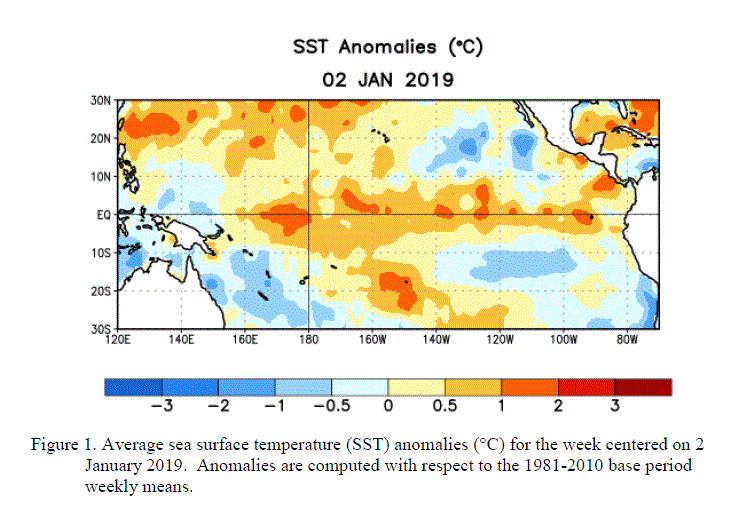
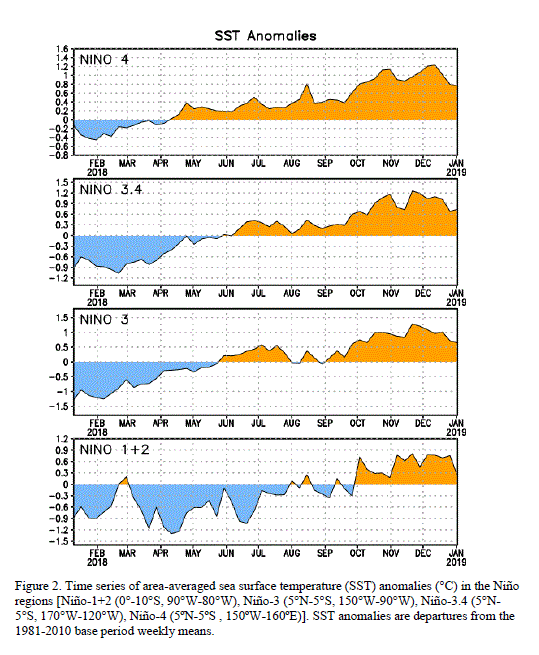
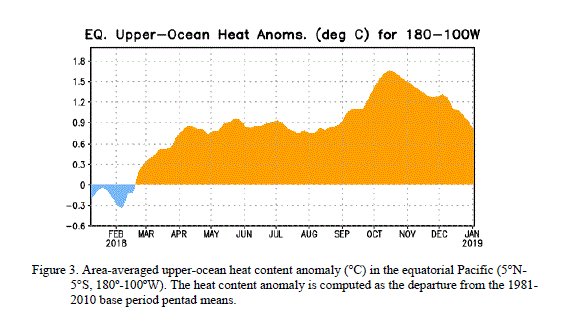
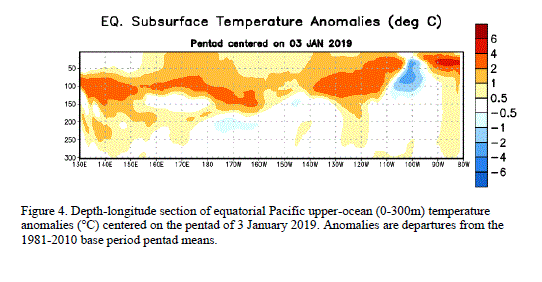
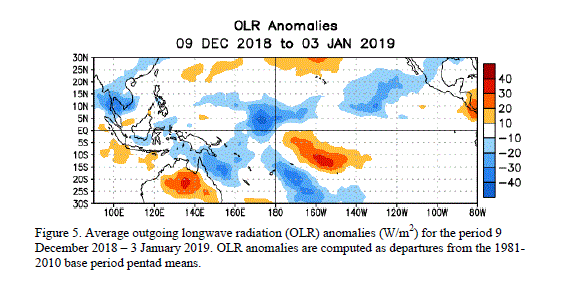
During November 2010, the ongoing La Niña was reflected by below-average sea surface temperatures (SSTs) across the equatorial Pacific Ocean (Fig. 1). For the second straight month, only small changes were evident in the Niño SST indices, which ranged from –1.3oC to –1.7oC at the end of the month (Fig. 2). The subsurface oceanic heat content (average temperatures in the upper 300m of the ocean, Fig. 3) also remained well below-average in association with a shallower-than-average thermocline across the central and eastern equatorial Pacific (Fig. 4). Convection remained enhanced over Indonesia and suppressed over the western and central equatorial Pacific (Fig. 5). Enhanced low-level easterly trade winds and anomalous upper-level westerly winds continued over the equatorial Pacific. Collectively, these oceanic and atmospheric anomalies reflect a moderate-to-strong La Niña.
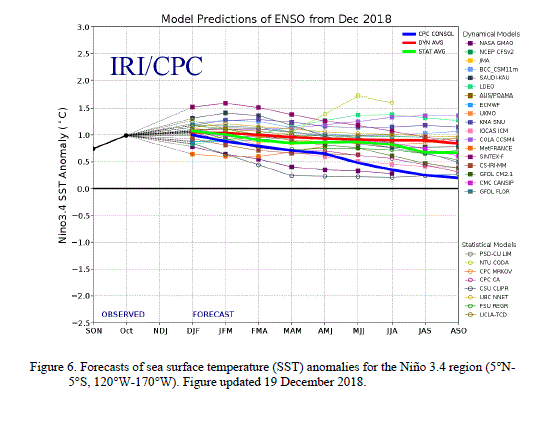
Consistent with nearly all ENSO forecast models (Fig. 6), La Niña is expected to peak during November-January and to continue into the Northern Hemisphere spring 2011. Thereafter, the fate of La Niña is more uncertain. The majority of forecast models and all of the multi-model combinations (thicker lines) indicate a return to ENSO-neutral conditions during the Northern Hemisphere spring and early summer. However, a smaller number of models, including the NCEP Climate Forecast System, suggest that La Niña could persist into the summer. Historically, there are more multi-year La Niña episodes than El Niño episodes, but other than support from a few model runs, there is no consensus for a multi-year La Niña at this time. Consequently, La Niña is anticipated to continue into the Northern Hemisphere spring, with no particular outcome favored thereafter.
Likely La Niña impacts during December 2010-February 2011 include suppressed convection over the central tropical Pacific Ocean, and enhanced convection over Indonesia. Impacts in the United States include an enhanced chance of above-average precipitation in the Pacific Northwest, Northern Rockies (along with a concomitant increase in snowfall), Great Lakes, and Ohio Valley. Below-average precipitation is most likely across the southern states, extending into the Mid-Atlantic region. An increased chance of below-average temperatures is predicted for the northernmost western and central states, and a higher possibility of above-average temperatures is forecast for much of the southern and central U.S. (see 3-month seasonal outlook released on November 18th, 2010).
<SNIP>View article here: http://www.cpc.ncep.noaa.gov/products/analysis_monitoring/enso_advisory/ensodisc.html
--
Check out http://groups.yahoo.com/group/californiadisasters/
Read our blog at http://eclecticarcania.blogspot.com/
Visit me on Facebook at http://www.facebook.com/derkimster
__._,_.___

No comments:
Post a Comment