
The Montserrat Volcano Observatory (MVO) said the mountain produced a sequence of tremors, which were accompanied by some ash falling from the sky.
"There is nothing to worry about now but it is just a reminder that this volcano is potentially active," acting MVO director Roderick Stuart said in a statement. "After two years of nothing happening people may get a sense that the eruption is over, but it is not."
Soufriere Hills roared back to life in 1997 for the first time in recorded history, killing 19 people, burying much of the island in ash and forcing half of the British territory's 12,000 inhabitants to leave.
Photo: Montserrat Volcano Observatory
~~~~~~~~~~~~~~~~~~~~~~~~~~~~~~~~~~~~~~~~~~~~~~~~~~~~~~~~~~~~~~~~~~~~~~~~~~~~~~~~~~~~~~~~~~~~~~~~~~~~~~~~~
Volcano Watch: Gleaning Pele's secrets from freshly quenched lava
Posted on Thursday, April 5, 2012.
(Volcano Watch is a weekly article written by scientists at the U.S. Geological Survey's Hawaiian Volcano Observatory.)
It's been a nearly a year since Volcano Watch last focused on chemical studies of Kilauea's lava. Well, you can rest assured that our petrologist has been working hard behind the scenes, enthusiastically scrutinizing every lava sample that gets bagged by those intrepid HVO geologists.
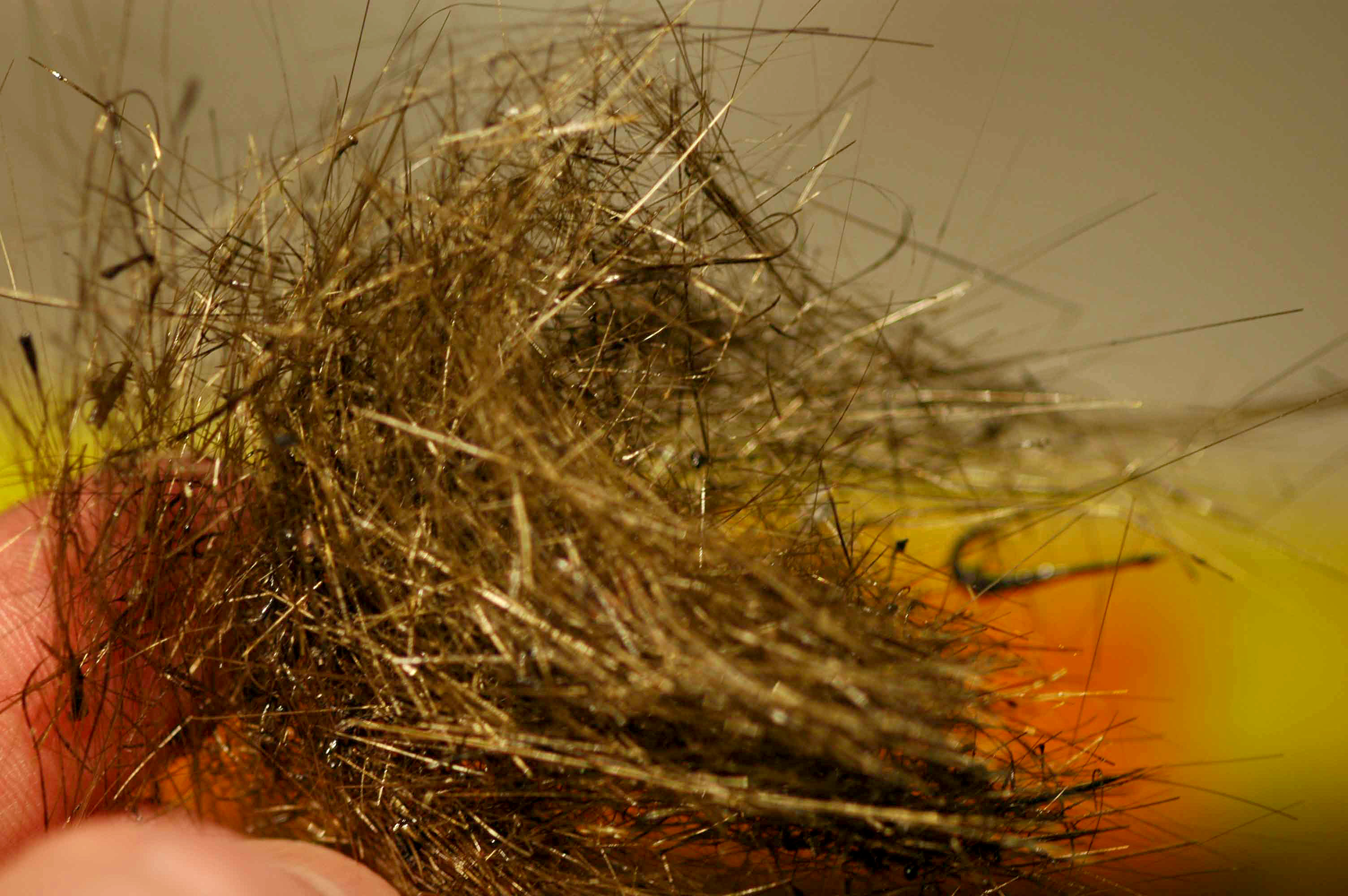
Examining a fresh sample of Pele's hair from the lava lake within the Halema`uma`u Overlook vent. Photo courtesy of USGS/HVO
As soon as the rocks arrive in his lab, our rock doctor performs "sample triage" and carefully assesses lava fragments for signs of changes related to eruptive conditions. Portions of Pele's hair, tears, and lava are sorted for different types of chemical analyses that will ensure a complete and thorough diagnosis of Kilauea's internal plumbing.
With surgical precision, small crystals are extricated from every glassy morsel and impeccably polished for electron microscope analysis. The glassy rock matrix provides eruption temperatures, because magma composition changes as it cools and crystals form. The composition of the crystals also varies according to temperature and can be used to track the path that magma takes to the surface.
By analyzing tiny pockets of glass that are occasionally entrapped by crystals as they form (called melt inclusions), our petrologist has been gleaning some of Madame Pele's best-kept secrets.
Sulfur is one of the last gases to emerge from basalt magma as it approaches the surface. Thus, tracking sulfur concentrations in melt inclusions enables the petrologist to evaluate physical changes in the shallow plumbing system that feeds and regulates Kilauea's eruptive behavior.
A little over a year ago (3/5/2011), spectacular fissure fountains broke out near Kamoamoa, just west of Pu`u `O`o. The chemistry of lava samples from this eruption shows that the fountains ruptured through magma that had been sitting underground in this area since eruptions in the 1960s. About three weeks after the event, as magma steadily fed the volcano from beneath, the shallow plumbing system soon repressurized, and magma began refilling lava lakes at the summit and at Pu`u `O`o.
The summit quickly resumed its steady-state eruptive condition of perpetual magmatic gargling in the throat of Halema`um`au. Beneath the billowing summit plume, hot and corrosive magma is roiling to the surface, disgorging its gases, and swallowing and regurgitating newly formed crust. Lava levels rise and fall like a barometer in response to summit inflation and deflation. Slowly but surely, magma consumes the walls of the vent itself.
Analysis of Pele's hair and tears collected from the Halema`uma`u overlook indicate that the lava at the surface has steadily cooled from 1,170 degrees Celsius (2,140 degrees Fahrenheit) at the onset of the summit eruption in March 2008, down to 1,155 degrees Celsius (2,110 degrees Fahrenheit) in recent months. Some of Pele's tears contain crystals of peridot (olivine), some of which have melt inclusions.
The range of crystal compositions and of sulfur preserved in melt inclusions tell us that the summit eruption has drawn from a magma reservoir as hot as 1,200 degrees Celsius (2,190 degrees Fahrenheit) and as deep as 1 km (0.6 mi). At present, the summit vent consistently taps magma at 1,160–1,155 degrees Celsius (2,120-2,110 degrees Fahrenheit) within 100 m (330 ft) of the surface, where it is rising, degassing, and recirculating.
Meanwhile, out on the rift, one year after reappearing in the bottom of Pu`u `O`o, lava is now vigorously flowing through a network of lava tubes and surface flows toward the ocean. Throughout the year, and just as it did before the Kamoamoa eruption, Pu`u `O`o lava has erupted at relatively low temperatures of 1,140–1,145 degrees Celsius (2,085-2,095 degrees Fahrenheit).
Rift lava continues to bear a complex mixture of higher- and lower-temperature crystals, with textures indicating they are simultaneously dissolving and regrowing in a dynamic environment.
High variability of sulfur trapped by crystals in the rift samples points to the continuous mixing of hotter, sulfur-rich magma from the summit with cooler, denser, and degassed magma in a shallow reservoir in the rift zone.
Kilauea's shallow plumbing system continues to mature after almost 30 years of eruption. Frequent petrologic check-ups ensure us that there are no signs it will expire any time soon.
http://www.hawaii247.com/2012/04/05/volcano-watch-gleaning-peles-secrets-from-freshly-quenched-lava/--
Zenguins!
Vei8-Volcanoes of the World Webcams
Roxxfoxx~~Adventures in Geology
Penguin News Today
Penguinology: The Science of Penguins
Gentoo Penguins of Gars O'Higgins Station, Antarctica
Canis lupus 101
Dances with Werewolves
Through Golden Eyes

__._,_.___

No comments:
Post a Comment