Article
Post-Eruptive Inflation of Okmok Volcano, Alaska, from InSAR, 2008–2014
Feifei Qu 1,2, Zhong Lu 2,* , Michael Poland 3, Jeffrey Freymueller 4, Qin Zhang 1 and Hyung-Sup Jung 5
1 College of Geology Engineering and Geomatics, Chang'an University, No. 126 Yanta Road, Xi'an 710054, China 2 Huffington Department of Earth Sciences, Southern Methodist University, Dallas, TX 75275, USA 3 U.S. Geological Survey, Cascades Volcano Observatory, Vancouver, WA 98683, USA 4 Geophysical Institute, University of Alaska, Fairbanks, Fairbanks, AK 99775, USA 5 Deptment of Geoinformatics, The University of Seoul, Seoul 02504, Korea
* Author to whom correspondence should be addressed.
Received: 23 September 2015 / Revised: 19 November 2015 / Accepted: 1 December 2015 / Published: 9 December 2015
(This article belongs to the Special Issue Volcano Remote Sensing)
Abstract
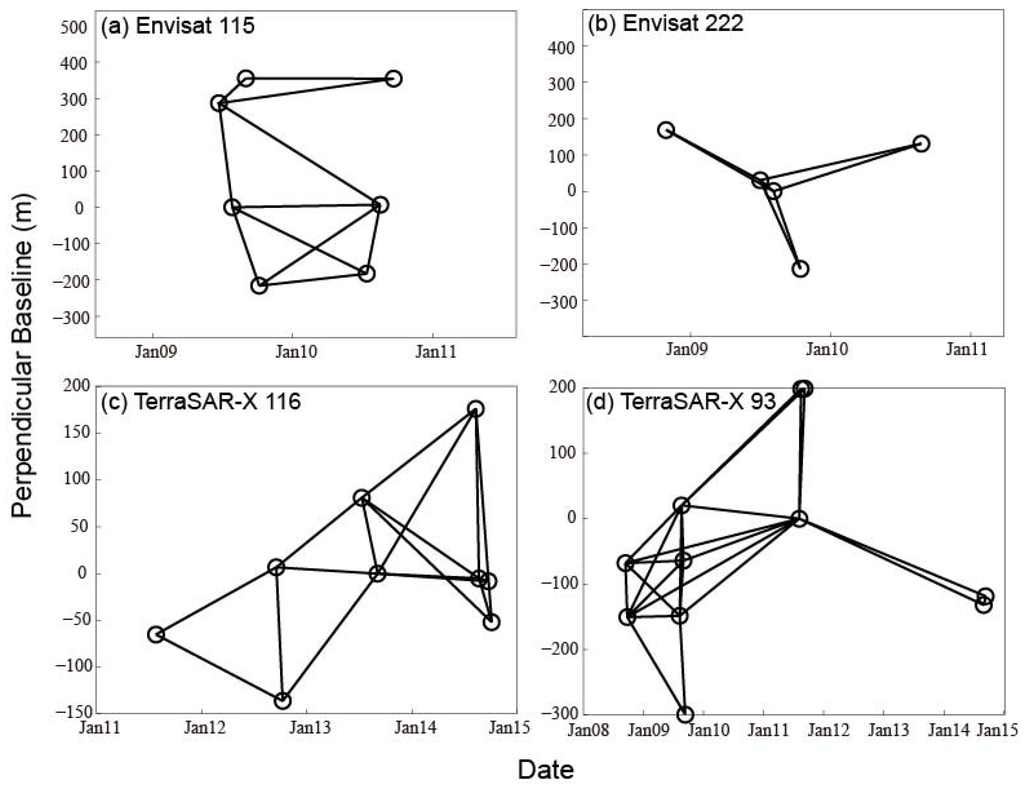
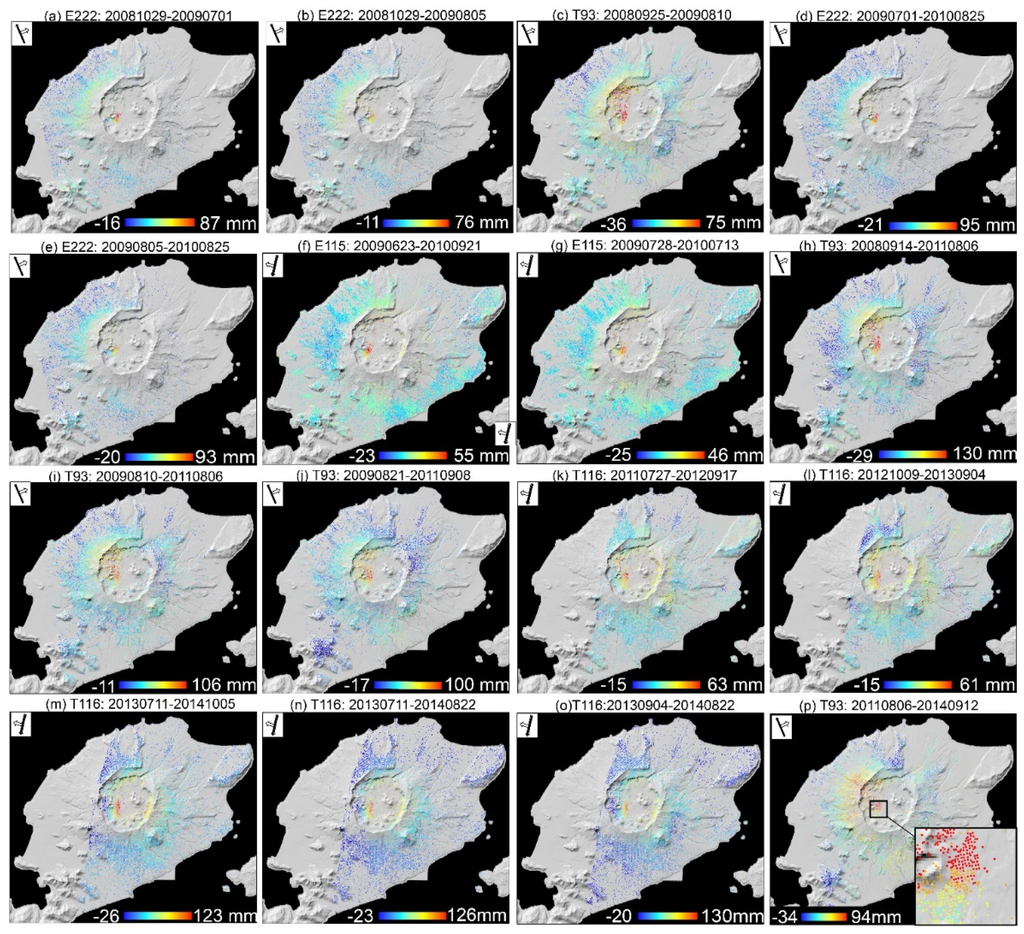
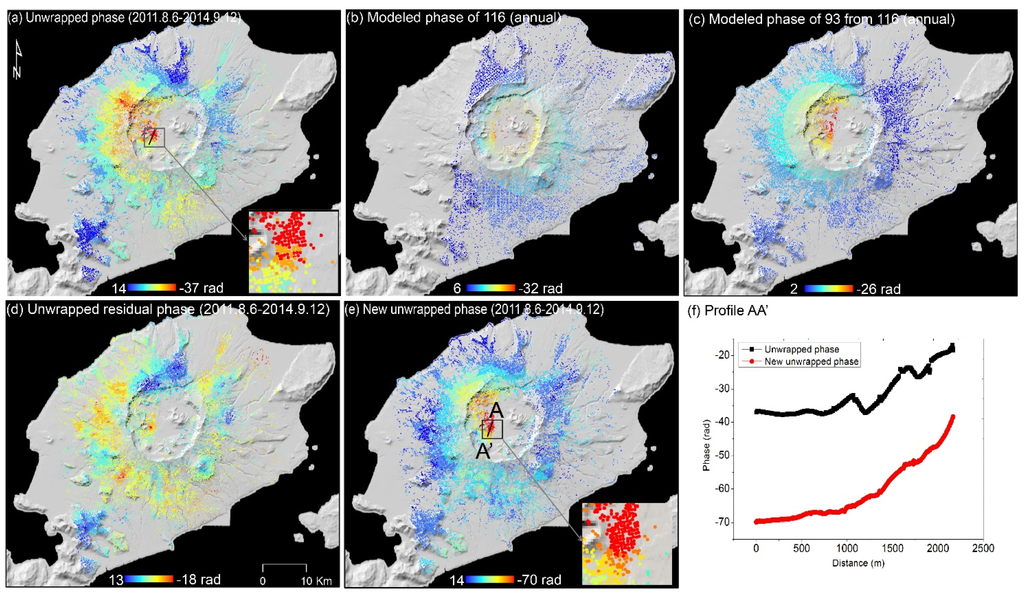
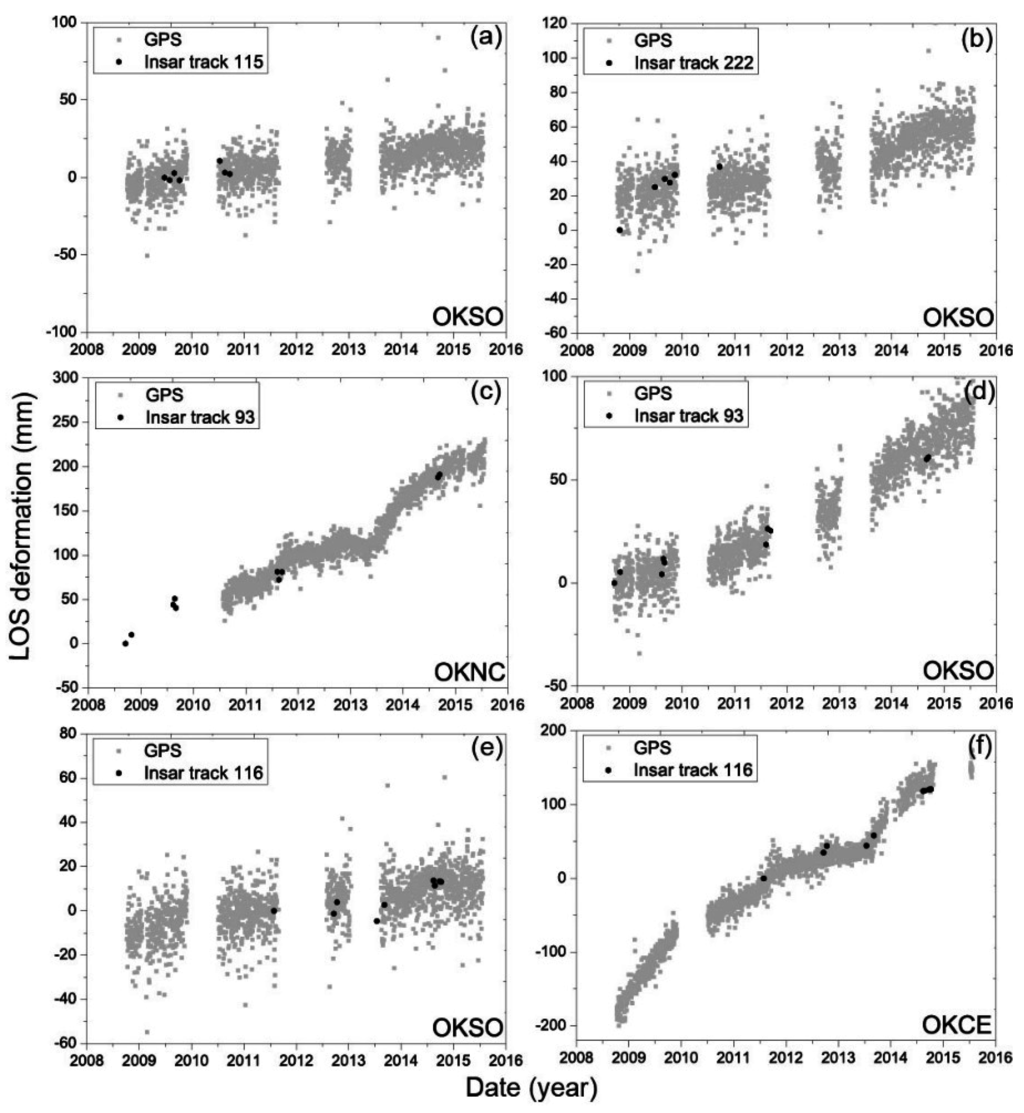
Okmok, a ~10-km wide caldera that occupies most of the northeastern end of Umnak Island, is one of the most active volcanoes in the Aleutian arc. The most recent eruption at Okmok during July–August 2008 was by far its largest and most explosive since at least the early 19th century. We investigate post-eruptive magma supply and storage at the volcano during 2008–2014 by analyzing all available synthetic aperture radar (SAR) images of Okmok acquired during that time period using the multi-temporal InSAR technique. Data from the C-band Envisat and X-band TerraSAR-X satellites indicate that Okmok started inflating very soon after the end of 2008 eruption at a time-variable rate of 48–130 mm/y, consistent with GPS measurements. The "model-assisted" phase unwrapping method is applied to improve the phase unwrapping operation for long temporal baseline pairs. The InSAR time-series is used as input for deformation source modeling, which suggests magma accumulating at variable rates in a shallow storage zone at ~3.9 km below sea level beneath the summit caldera, consistent with previous studies. The modeled volume accumulation in the six years following the 2008 eruption is ~75% of the 1997 eruption volume and ~25% of the 2008 eruption volume.--

__._,_.___







No comments:
Post a Comment